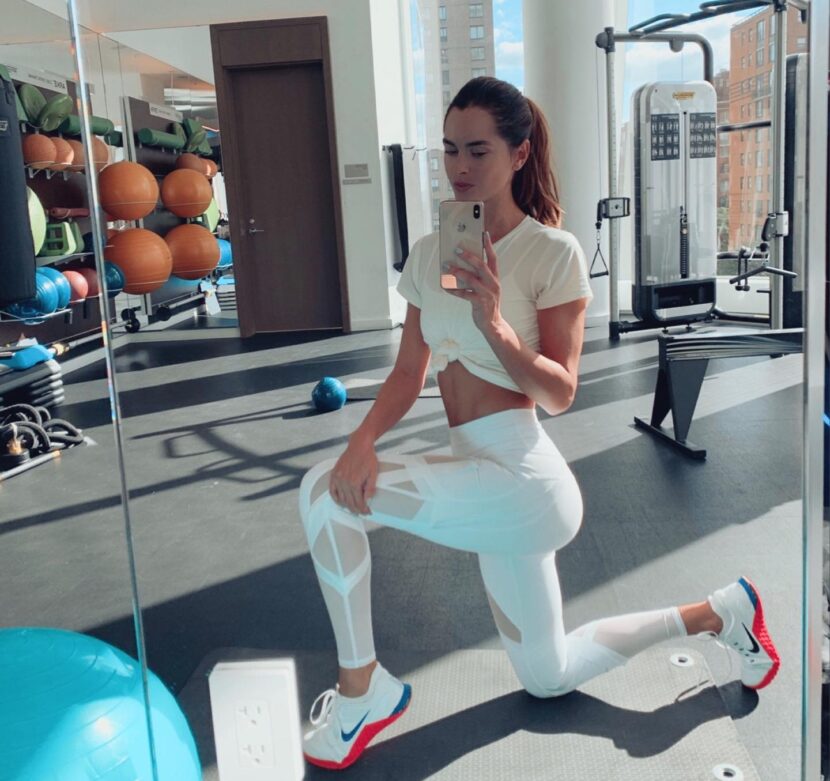
Training on your period
I get this question from you so often, and I completely understand why it worries many women. Working out during your period still feels like a controversial topic, even though most doctors agree that it’s not only safe but in many cases even beneficial. Still, I always say the same thing: listen to your body first. Every woman is different, and our cycles can be completely opposite in how they affect us.
From my personal experience, and from what I see around, the biggest mistake is to force your body into a workout when the first day feels unbearable. If you deal with strong pain, dizziness, or extreme fatigue, there is nothing wrong with taking a day off. Rest on the first day can sometimes work better than any training session. But once the sharp discomfort goes away, adding light or moderate activity can actually help you feel more stable, comfortable, and even more motivated.
Regular aerobic activity is known to relieve PMS symptoms. Walking, light jogging, cycling, low-impact home workouts — they all increase circulation and help your body release physical tension. A lot of women notice that staying active makes the emotional part of PMS less intense. Much of it comes from endorphins, the natural “feel-good” chemicals that act like painkillers and create a sense of balance. That’s why after a workout you often feel calmer, more focused and less irritated, even during these days of the month.
Another interesting thing many women don’t realize is that during your period you may actually feel stronger. Low levels of female hormones can help some women perform better, increase endurance, or feel more energy during training. Of course, this doesn’t apply to everyone, but it’s a good reminder that period days don’t automatically mean weakness or limitations. Often it’s simply about choosing the right type of activity.
Light workouts can also help with painful periods, especially exercises that increase blood flow in a gentle, controlled way. Even something as simple as a slow walk can reduce cramps. Stretching, mobility routines or yoga can also support your body, especially if you’re dealing with tension in the lower back or legs. The main rule is not to push yourself into something too intense, especially movements that heavily engage your core. For example, I usually avoid focused ab workouts these days because they tend to add extra pressure and discomfort.
What I always want you to remember is that our bodies are incredibly smart. They send signals, and it’s our job not to ignore them. If something feels wrong, too painful, or draining instead of energizing, adjust the workout or skip it altogether. There is no “failure” in listening to yourself. Healthy lifestyle is not about forcing yourself no matter what; it’s about learning how to work with your body, not against it.
Stay consistent, stay mindful, and stay healthy.